Showing posts with label Mississippi State University. Show all posts

Thursday, July 17, 2014

Epsom Salt as a Natural Fertilizer

For those of you growing peppers or tomatoes who have noticed yellowing in the leaves of your veggies, or simply are looking for a way to produce bigger fruit, look no further. The answer to your problems? Epsom salt.

Epsom salt, also known as Magnesium sulfate (MgSO4), is commonly used as bath salts or for foot soaks, but it is also ideal for gardening. Magnesium is the central atom of chlorophyll, and therefore essential for its production in plants.

Molecular structure of chlorophyll
If there is a lack of magnesium, the plant will begin to break down chlorophyll in the older leaves first, and transport the magnesium to the younger leaves, which have a greater demand for chlorophyll. When a plant is deficient in magnesium, yellowing will occur between the veins of older leaves first. A lack of magnesium will also cause fruits to be small, and woody.

Magnesium deficiency in a raspberry plant 
To use on your vegetables and fruits, Epsom salt can either be directly applied in the hole when planting veggies, or sprinkled around the plant at the base and re-applied every two weeks. Epsom salt can also be made into a solution and be sprayed directly onto the leaves of the plant (if you've noticed me spraying my peppers over in plot CE2, I've been applying an Epsom solution in hopes of bigger, better peppers!). While Epsom salt is great for peppers and tomatoes, it works great on pretty much any plant (including roses) and especially those in well-drained soils lacking in organic material (the magnesium in the soil quickly leaches out) or acidic soils.

If you need help identifying whether or not you have a magnesium deficiency in your plants, here's a link to a blog post on nutrient deficiencies I posted a few weeks ago.


Stephanie Stiglmeier
Community Garden Intern

Wednesday, July 16, 2014

The Japanese Beetle

Besides  backseat drivers and people who litter, there is nothing that annoys me more than the Japanese Beetle.

Japanese Beetles are composed of 25% hatred, 25% annoyance, and 50% pure evil
These pests are a huge problem both in the garden and in landscaping. They were first found in the United States in 1916 in New Jersey. They were thought to have been transported here in a shipment of Iris bulbs from Japan prior to 1912. The beetle has quickly spread to every state east of the Mississippi River.

The larva of these beetles, commonly known as a grub worm, feed on the roots of turf grass and can cause serious damage if left untreated. There are grub-killing products available, which commonly come in a powdered form.

The root of evil
The adults, however, are the focus for us here in the garden as they are starting their annual feasting. 

Creatures of mass destruction
Japanese beetles feast one over 200 species of plants, including beans, strawberries, tomatoes, peppers, grapes, hops, roses, cherries, plums, pears, peaches, raspberries, blackberries, corn, peas, and blueberries. Once an adult beetle finds a tasty food source, it releases a pheromone that attracts other beetles. 

Japanese Beetles are having a party.... all over your bean plants
The population on the food source rapidly increases, and the adults will begin mating, all while they skeletonize the leaves of the plant. The beetles are also known to feed on the fruit of the plant when it is available. The damage caused by the beetles can be extensive, and can quickly kill or seriously damage a plant. 


So how do we stop these menaces? Easy. Soapy water. Simply take a small pail, fill it with water, add a couple drops of soap. Then bury these nasty pests in a watery grave.

Die! Return from whence you came!
You could also make a soapy solution (using organic, liquid dish soap as discussed in Handling the Cucumber Beetle Organically) and spray it directly on the beetles if you don't want to touch them. The spray also gives you the added benefit of watching them wither around as they slowly suffocate (bwahahahaha).

Suds of death
Please, PLEASE, only use organic soap when making a spray solution, and if you're going to drown them in a bucket (and use non-organic soap), please dump it out at home, away from the garden. 

Also, please do not use a Japanese Beetle Trap. These traps are not very effective, and contain pheromones which attract more beetles than they actually trap as the beetles are very clumsy flyers and have a hard time landing in the trap.

Noneffective Japanese Beetle trap
Wiki Article on Japanese Beetles, including a complete list of host plants (plants that the beetles will feed on)

Stephanie Stiglmeier
Community Garden Intern

* NOTE FROM JEN: One plant that seems to get decimated by the beetle -- but actually survives an onslaught pretty well -- is the mighty eggplant. I've had plants with lace leaves still produce a ton of eggplants. This isn't reason to let the beetles live -- no, I'm with Stephanie in my desire to squash them all to smithereens -- but just a note that you might not have to pull out an eggplant that looks like it was attacked. If it's putting up new leaves and flowering, it'll fruit, even with lacy leaves.

Saturday, June 28, 2014

If You Can't Beat 'Em, Eat 'Em

Found this great article posted on The Chicago Botanical Garden's blog about edible weeds in the garden.

I have seen all but one of the weeds listed in the blog post, and have snacked on them a few times. My personal favorite has to be purslane, both for its taste and nutritional value.

But the list doesn't stop with these 5. Both at home and in the garden, there are many other "weeds" which can be eaten:

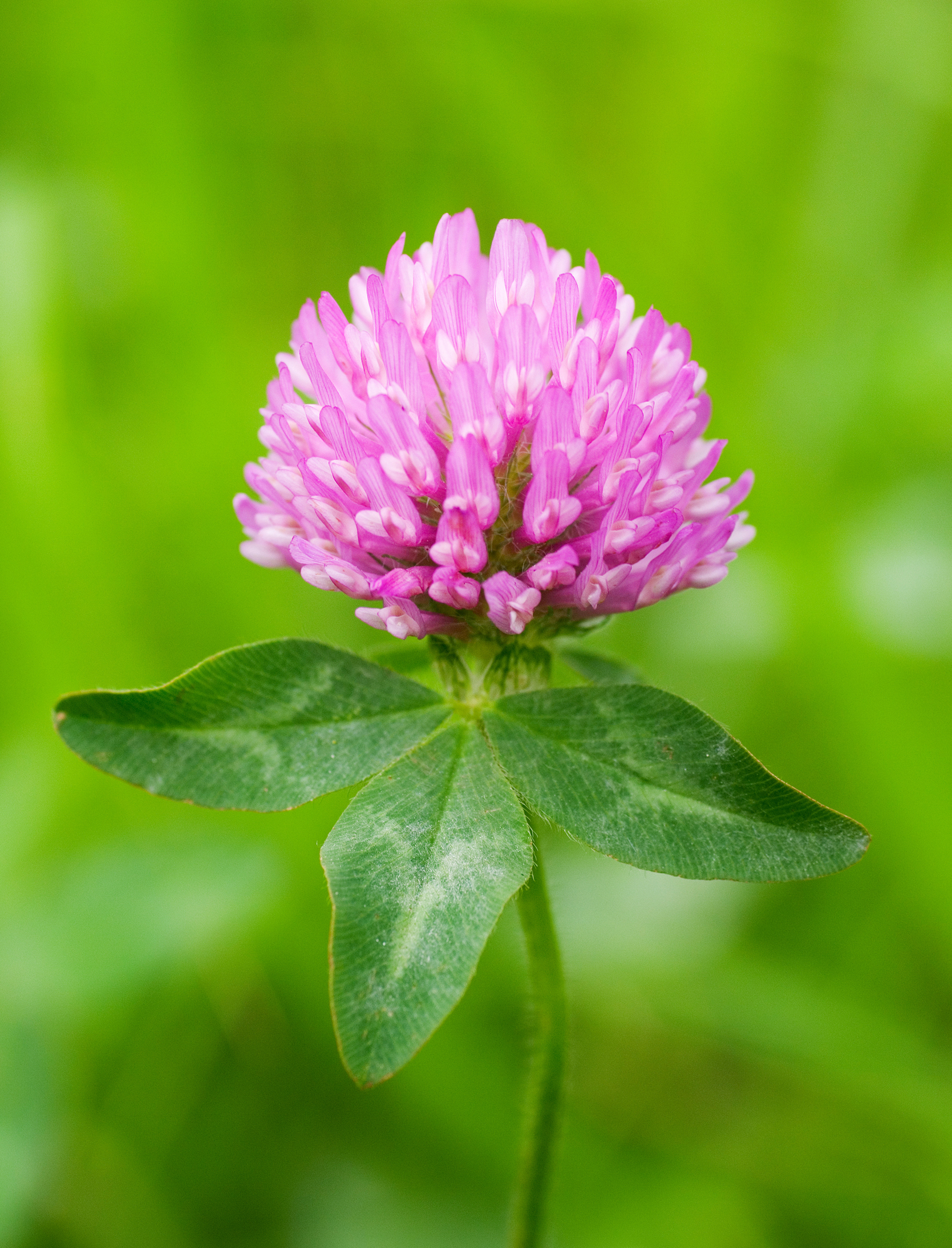
1) Red Clover (Trifolium pratense)

 Blossom of Trifolium pratense


The blossoms of this clover can be eaten fresh, tossed in a salad, or made into a tea. The leaves can also be used in salads.


2) Broadleaf Plantain (Plantago major)

Plantago major shown with flowers

The younger leaves of plantain can be eaten raw, and the older leaves can be picked and cooked like other tough greens such as kale or collard greens. The leaves are also high in calcium and vitamins A, C, and K. 


3) Sorrel (Rumex acetosella)

 
The maroon blooms of a a female Rumex acetosella

Sorrel has a tart, lemony flavor which can add some zing to fresh salads. The older leaves can also be cooked down and used in stir-frys and omelets. The leaves are arrow head shaped, and can be commonly found in acidic soils. 


4) Chickweed (Stellaria media)

A small cluster of rapidly-spreading Stellaria media
Chickweed, as its name references, is a favorite among chickens; and for good reason! The  leaves are both delicious and nutritous, and commonly used in salads. The leaves are also very popular in Japan, used in a traditional dish which is consumed during the spring-time festival, Nanakusa-no-sekku.


***WORDS OF CAUTION*** 
Please be sure to properly identify a plant before consumption. 
Please be sure no pesticides or herbicides have been used in the area (wind causes drift).


Stephanie Stiglmeier
Community Garden Intern

Wednesday, June 25, 2014

Rain Rain, Go Away!


We've gotten over 2 inches of rain in the past couple of days, and it doesn't seem to be stopping any time soon! Jen and I have been checking the rain gauge every day, and we record it on the calendar out on the garden bulletin board, as well as every time Jen waters. If ya'll are ever curious if you need to water, go ahead and look it over.

Stephanie Stiglmeier
Community Garden Intern

Saturday, June 21, 2014

Plant Nutrient Deficiencies

Here is a handy publication by The Mississippi State University Extension Service about identifying plant nutrient deficiencies in ornamental plants (which includes garden vegetables). To view the flow chart better, right click on the page and select "rotate clockwise".

Also, an additional chart for identifying deficiencies:


Stephanie Stiglmeier
Community Garden Intern

Wednesday, June 18, 2014

Handling the Cucumber Beetle Organically

Walking through the garden the past two weeks, I've noticed damage to some of the leafy greens in the garden.

  
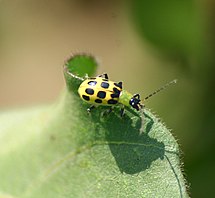
The likely culprits? Diabrotica undecimpunctata (The Spotted Cucumber beetle) and Acalymma vittatum (The Striped Cucumber Beetle); Two beetles that belong to the same family (Chrysomelidae). 

Diabrotica undecimpunctata (Spotted Cucumber Beetle)
Acalymma vittatum (Stripped Cucumber Beetle)


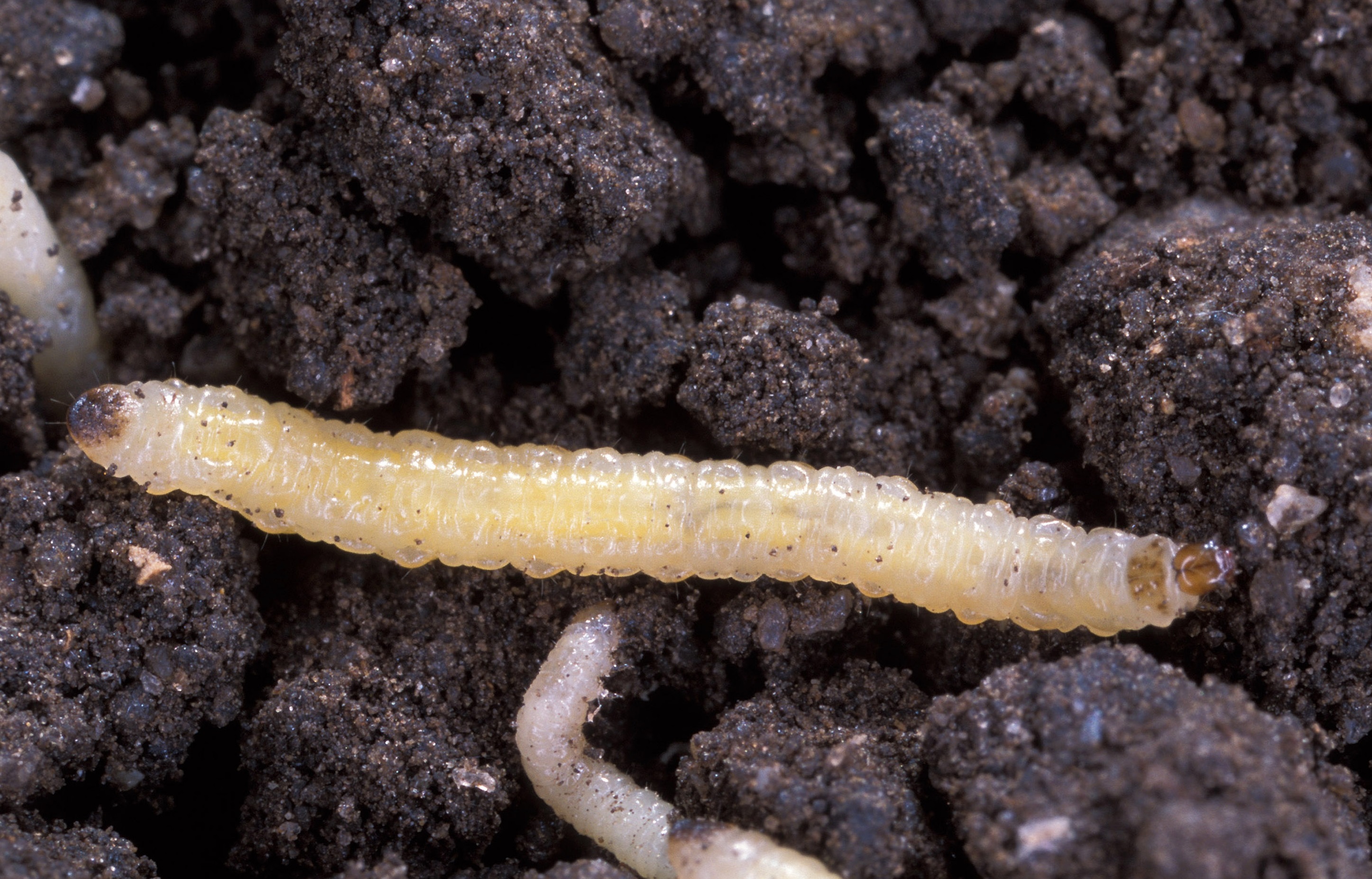
Both are commonly referred to as the Cucumber Beetle and both cause similar damage to vegetable leaves. The striped cucumber beetle is about 1/5 inch long with black head and wings striped with yellow and black. The spotted cucumber beetle is about 1/4 inch long and has a black head and black legs with a yellowish-green body and wing covers with 12 distinct black spots. The larva stage of both species live in the soil and feed on the underground parts of plants.


Larvae of the Cucumber Beetle
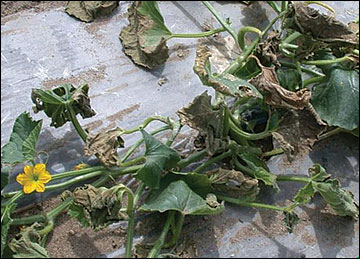
The Stripped Cucumber Beetle over-winters in Illinois, while the Spotted Cucumber Beetle migrates from the south. In the spring, the beetles start to feed on leafy vegetable greens. While feeding on a plant, the adults will lay eggs at the base of the plant. The larva of the Spotted Cucumber Beetle is also called Southern Corn Rootworm, but both larva will feed on the base and the roots of plants. Besides the damage cause to the leaves by the adults, and the damage to the roots by the larvae, the adults also spread the bacterial wilt disease Erwinia tracheiphila.

Damage to cucumber from Erwinia tracheiphila
So how can these little monsters be stopped? Organically, there are two common ways:

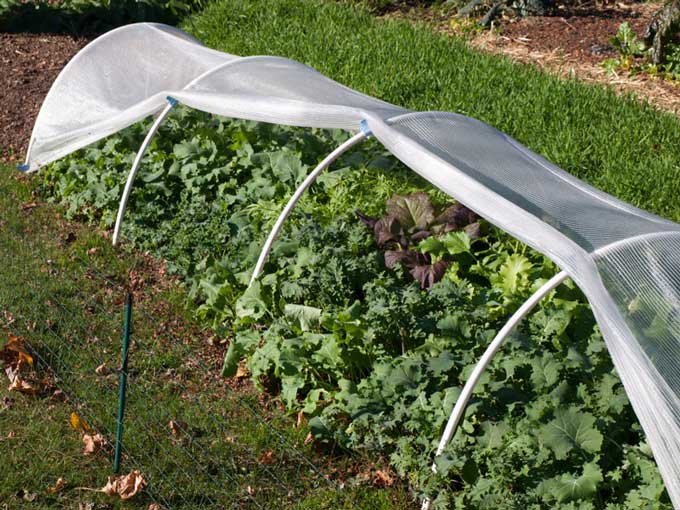
Polyester Row Covers

Polyester row covers protecting salad greens
These row covers protect the plants from insects, while still allowing in air, light, and water.

Castille-Soap Spray Solution

To make this solution for use in the community garden, it is VERY important for ya'll to use an organic soap (this does not include Dawn, sorry!). The one that will most likely be easiest to find would be Dr. Bronner's Castile Liquid Soap. The closest place in Glenview to find it would be at Whole Foods or Target in the Beauty Products aisle. 

Dr. Bronner's Castile Liquid Soap
To make the solution, simple add a few drops of soap to a spray bottle (preferably a new spray bottle, or one that hasn't been used with pesticides or herbicides) full of water. Spray directly on the bugs, on the leaves, flowers, stems, and around the roots of the plants. Try not to over-saturate the soil.

If you cannot find Dr. Bronner's Castile Liquid Soap, any other kind of organic, Castile soap will work for this solution. The spray can also be used on other insect pests, such as the Japanese Beetle (Popillia japonica)

Related Links:

Cucumber Beetle Article by Gold Harvest Organics

Stephanie Stiglmeier
Community Garden Intern


Tuesday, June 17, 2014

Soil: a Gardener's Greatest Asset

Soil is a living organism; it grows, it moves, it "breathes," it hosts life both above and below its surface. It is home to countless species of insects, and hosts billions of microorganisms in each square foot. Society depends on soil not only for the cultivation of food, but also for the clothes we wear and the houses we sleep in at night. There are hundreds of thousands of soil types globally, and each has its own unique characteristics, making them suitable or unsuitable for crops, building, mining, sewage, and other needs.
In order to effectively use land, one must first identify the soil series that are present. To do this, you can go online to the Web Soil Survey (hosted by the USDA) and enter your address to find out the soil series, land descriptions, and suitable land uses.


According to the Web Soil Survey, Wagner Farm, and particularly the Community Garden, consists of the soil series "Wesley fine sandy loam". It is described as a soil that is " very deep, somewhat poorly drained soils formed in coarse textured outwash material and in the underlying moderately fine textured lakebed sediments or till. They are on low ridges in former glacial lakes and on till plains". These soils, along with the rest of Glenview, were covered in glaciers millions of years ago, and as these glaciers began to melt, lakes were formed (this is were The Great Lakes came from). Along the edge of these lakes, deposits of sand and silt gathered. The water eventually receded or dried up in these glacier lakes, but the sand and silt remained.


Glacial Deposits and Landforms in the Continental United States
It is also because of this glacier movement across Glenview that the soils within our town differ so much. I live over by the forest preserve on West Lake, and the two predominant soils on our property are "Drummer silty clay loam" and a "Wauconda silt loam". These are soils that are formed in the out-wash plains around lakes, rivers, and streams. Although this is only a 5.5 mile difference, the soils on the two properties vary. The glacier movement across the upper midwest causes for a vast variety of soil series within a small range. 

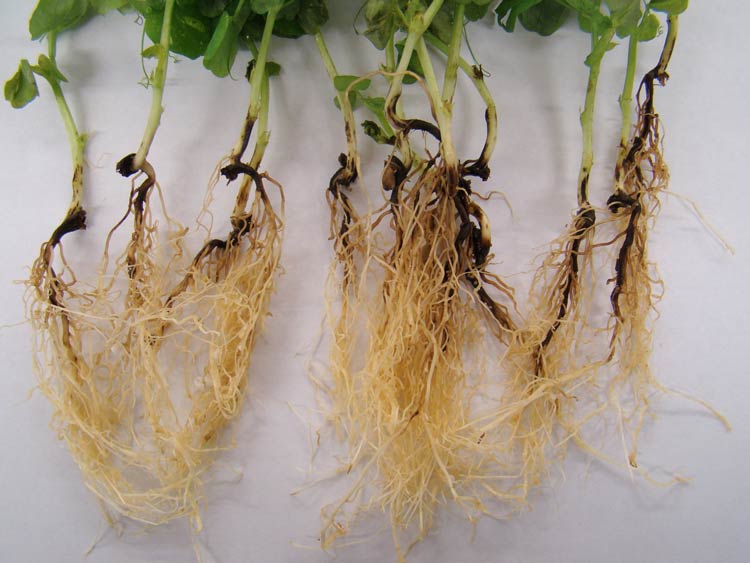
The soil series in the Wagner Farm Community Garden is also described as "somewhat poorly drained" and having "An intermittent perched seasonal high water table is at a depth of 30 to 61 cm (1 to 2 feet) below the surface at some time during the spring in normal years". Although the soil is fine and sandy (which usually means fast drainage of water), because of the perched water table in the spring, you will find that the garden is more prone to becoming soggy, muddy, and wet long after a good rain. Because of this, it is important to provide adequate drainage for crops that prefer good drainage and hate "wet feet." The accumulation of excess water around plants roots can also promote disease and root rot in plants. 


Root rot in Pea plants
An easy way to help alleviate the pooling of water around the plants is by adding sand to the soil where you are planting. Sand creates large pore spaces in the soil where water can move quickly through.

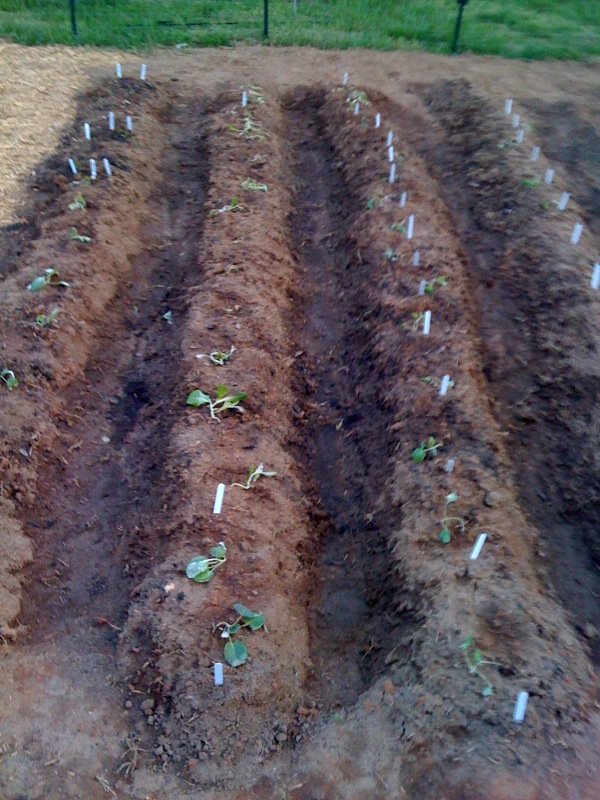
Another way to help with drainage is to create a furrow, or trench, in between your rows of plants. This will help water to drain away from your plants and further avoid root rot.
Furrows created in between rows of vegetables

Watering in the early mornings is also another way to help avoid rot or fungal disease. By watering in the early morning, the plant can uptake the water, and any excess water will evaporate during the heat of the day. If you water in the evenings, the water will sit around the plants all night and will start to cause issues.

So if you've had problems in the past with root rot or drowning plants, try these methods to help with drainage.


Other Helpful Links:


Stephanie Stiglmeier
Community Garden Intern

Wednesday, June 11, 2014

Parking for Saturday, June 14th

Hey Gardeners!

The Dairy Breakfast at Wagner Farm is THIS Saturday, so there will be almost no parking due to the large amount of people expected to show up. Just wanted to give ya'll a head's up that parking will be VERY limited.

Thanks!
Stephanie Stiglmeier
Community Garden Intern

Tuesday, May 20, 2014

Community Garden Intern

Hello Community Gardeners!

My name is Stephanie Stiglmeier, and I will be the Community Garden intern for 2014. After taking a tour with Jen yesterday and meeting all of the staff, I cannot be more excited to work with ya'll.


A little bit about myself: I come from a German family, and my father's family owns a German sausage factory in Wheeling. I graduated from Glenbrook South in 2012, and I currently attend Mississippi State University as a Horticulture major. I am also a hobbyist beekeeper and an avid outdoors-woman. Some of my areas of interest relating to horticulture are: fruit, nut, and vegetable production; organics & homeopathic medicines; landscape design; land/habitat conservation; sustainability; and plant breeding. Some of my other hobbies and interests include hiking, camping, and spending time with my large family.  

I am very outgoing, personable, and polite; so please feel free to ask any questions! I am here to help ya'll, and I'm also here to learn whatever ya'll can teach me. I have a lot of resources available to me through my university, so if I don't know the answer to one of your questions I can get you the information through those resources.

Looking forward to a productive summer and meeting all of ya'll!


Stephanie Stiglmeier
Community Garden Intern 2014