Soil is a living organism; it grows, it moves, it "breathes," it hosts life both above and below its surface. It is home to countless species of insects, and hosts billions of microorganisms in each square foot. Society depends on soil not only for the cultivation of food, but also for the clothes we wear and the houses we sleep in at night. There are hundreds of thousands of soil types globally, and each has its own unique characteristics, making them suitable or unsuitable for crops, building, mining, sewage, and other needs.
In order to effectively use land, one must first identify the soil series that are present. To do this, you can go online to the
Web Soil Survey (hosted by the USDA) and enter your address to find out the soil series, land descriptions, and suitable land uses.
According to the Web Soil Survey, Wagner Farm, and particularly the Community Garden, consists of the soil series "Wesley fine sandy loam". It is described as a soil that is "
very deep, somewhat poorly drained soils formed in coarse textured outwash material and in the underlying moderately fine textured lakebed sediments or till. They are on low ridges in former glacial lakes and on till plains". These soils, along with the rest of Glenview, were covered in glaciers millions of years ago, and as these glaciers began to melt, lakes were formed (this is were The Great Lakes came from). Along the edge of these lakes, deposits of sand and silt gathered. The water eventually receded or dried up in these glacier lakes, but the sand and silt remained.
 |
| Glacial Deposits and Landforms in the Continental United States |
It is also because of this glacier movement across Glenview that the soils within our town differ so much. I live over by the forest preserve on West Lake, and the two predominant soils on our property are "Drummer silty clay loam" and a "Wauconda silt loam". These are soils that are formed in the out-wash plains around lakes, rivers, and streams. Although this is only a 5.5 mile difference, the soils on the two properties vary. The glacier movement across the upper midwest causes for a vast variety of soil series within a small range.
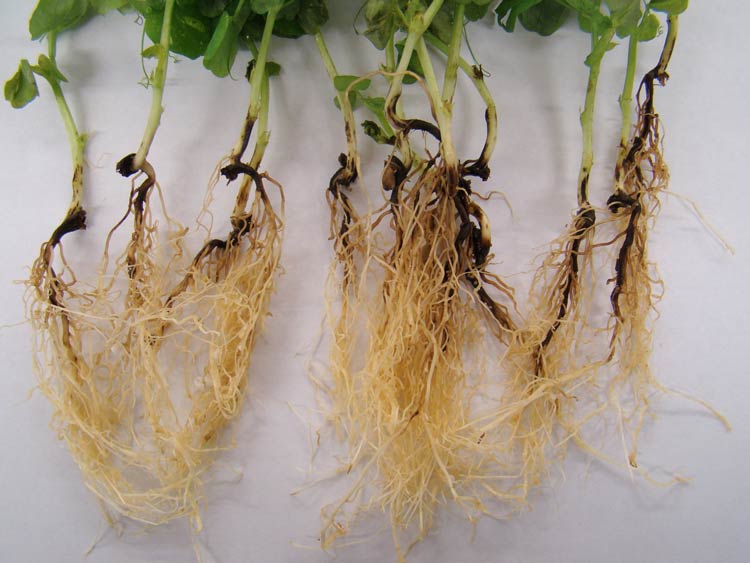
The soil series in the Wagner Farm Community Garden is also described as "somewhat poorly drained" and having "An intermittent perched seasonal high water table is at a depth of 30 to 61 cm (1 to 2 feet) below the surface at some time during the spring in normal years". Although the soil is fine and sandy (which usually means fast drainage of water), because of the perched water table in the spring, you will find that the garden is more prone to becoming soggy, muddy, and wet long after a good rain. Because of this, it is important to provide adequate drainage for crops that prefer good drainage and hate "wet feet." The accumulation of excess water around plants roots can also promote disease and root rot in plants.
 |
| Root rot in Pea plants |
An easy way to help alleviate the pooling of water around the plants is by adding sand to the soil where you are planting. Sand creates large pore spaces in the soil where water can move quickly through.
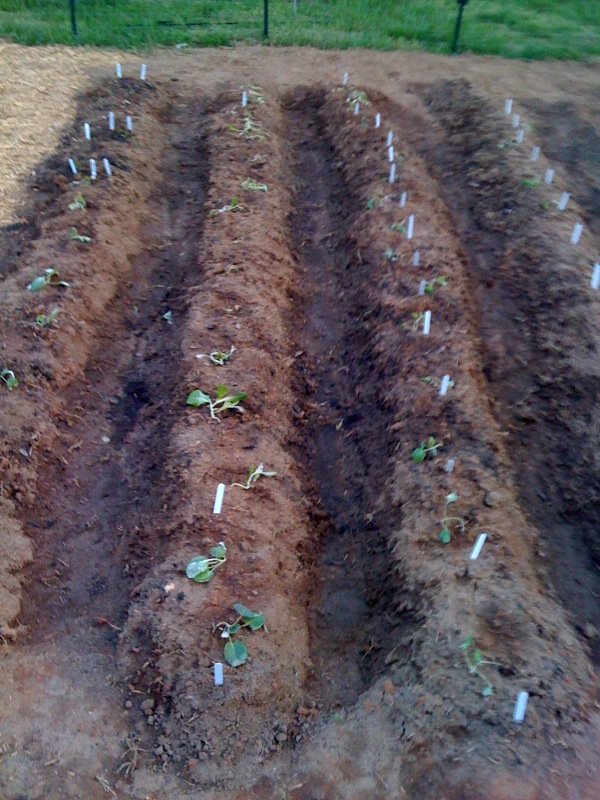
Another way to help with drainage is to create a furrow, or trench, in between your rows of plants. This will help water to drain away from your plants and further avoid root rot.
 |
| Furrows created in between rows of vegetables |
Watering in the early mornings is also another way to help avoid rot or fungal disease. By watering in the early morning, the plant can uptake the water, and any excess water will evaporate during the heat of the day. If you water in the evenings, the water will sit around the plants all night and will start to cause issues.
So if you've had problems in the past with root rot or drowning plants, try these methods to help with drainage.
Other Helpful Links:
Stephanie Stiglmeier
Community Garden Intern